
Sea freight to Costa Rica, explained container by container
For anyone shipping goods or household items from the US and weighing up a full container against shared space, here is how the ocean route actually works.
Read the latest shipping news and updates Compare carriers and transit timesHow much you're shipping decides which container makes sense
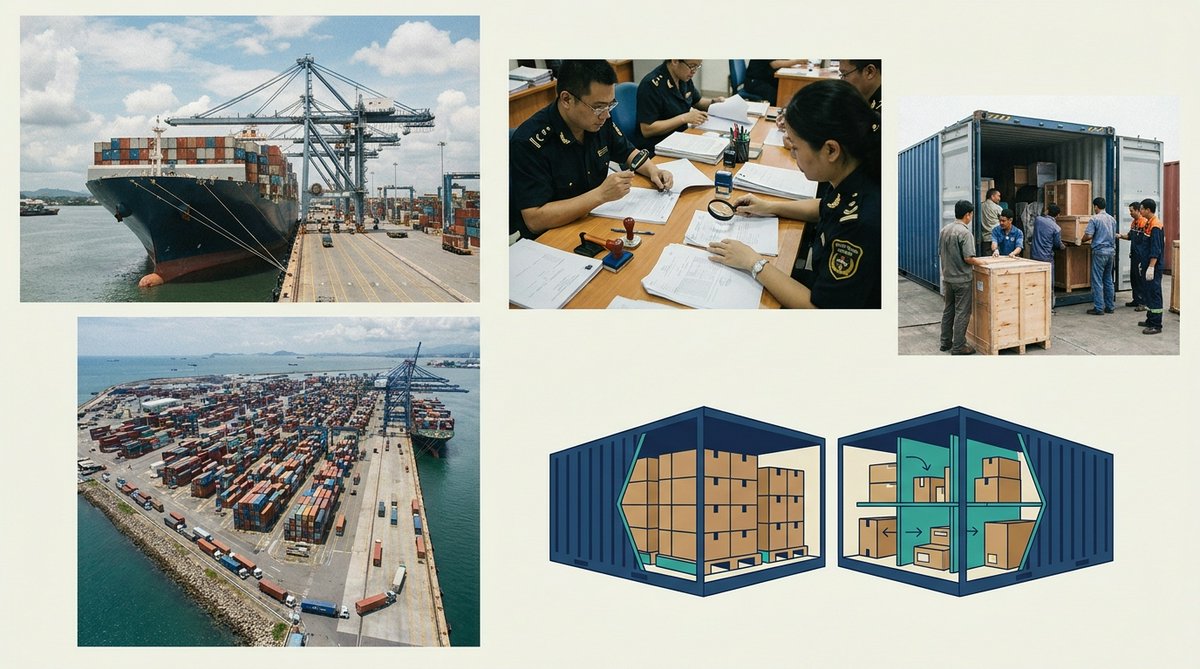
A Full Container Load (FCL) means you book an entire 20ft or 40ft container for your goods alone. A Less than Container Load (LCL) means your goods travel in a container shared with other shippers' cargo, and you pay only for the space your goods take up. The choice between them comes down to how much you're moving, not which one is generally better.
If you're shipping a houseful of furniture, a business's full pallet order, or anything that fills a large share of a container on its own, FCL usually makes sense. You get the whole box to yourself, your goods aren't handled or repacked alongside anyone else's, and the container is sealed once loaded and stays sealed until it reaches you.
If you're shipping a handful of boxes, a partial household load, or a small commercial order, LCL lets you avoid paying for space you don't need. The trade-off is that your cargo gets consolidated with other shipments at an origin warehouse and separated again at the destination port, which adds handling steps and can add time to the process.
What actually shapes the decision
- Volume: the closer your shipment gets to filling a container, the less sense LCL makes.
- Packaging: FCL cargo is handled less between origin and Port of Caldera or Port of Limón, which matters for fragile or high-value items.
- Booking flexibility: a full container can usually be booked and scheduled directly with a carrier, while LCL space depends on a consolidator's own sailing schedule.
- Budget shape: FCL is a flat cost for the container regardless of how full it is, while LCL scales with the volume you actually ship.
Neither option is fixed once you've picked it. Some shippers start with LCL for a first small shipment and move to FCL later once they're sending full pallet loads regularly. The right call depends on what's actually going in the box, and the rest of this guide walks through what each option costs and how long each one typically takes on this route.
20ft FCL, 40ft FCL, and LCL compared
The right choice depends mainly on how much you are shipping. The table sets out what changes between them so you can match your shipment to the one that fits.
| Container option | Typical transit speed | Minimum shipment size | Booking process |
|---|---|---|---|
| 20ft FCL (Full Container Load)Suits a smaller household move or a business shipment that does not fill a 40ft box but still benefits from having the container to itself | Faster of the two Full Container Load options, since it is a single container with no consolidation stop | Enough goods to fill roughly a quarter of the container onward, though most carriers set no strict minimum | Booked directly with a carrier or through a freight forwarder as a standalone container, once you have a commercial invoice and packing list ready |
| 40ft FCL (Full Container Load)Suits a full household relocation or a larger commercial load, where the cost per cubic metre works out lower than splitting it across an LCL booking | Same transit time as the 20ft on the same sailing, since both travel as a single container | No fixed minimum, but only worth the extra space if you have enough volume to use it | Same booking process as the 20ft, directly with a carrier or forwarder, with the same document requirements |
| LCL (Less than Container Load)Suits a small household shipment, a single vehicle's worth of boxes, or a business testing the corridor before committing to full container volumes | Usually the slower option, because your goods wait for the consolidator to fill the container and there is an extra deconsolidation step on arrival | No container to fill. Consolidators typically accept small volumes, often quoted per cubic metre (CBM) or per unit of weight | Booked through a consolidator or forwarder, who groups your goods with other shipments before the container departs |
This is general guidance on how these three options typically differ, not a set of tested results, and actual transit times and costs vary by carrier, season, and consolidator schedule. Check current terms directly with the carrier or forwarder handling your booking, and see the LCL vs FCL guide for a fuller walkthrough of how to decide.
From booking to delivery: what happens at each stage
Once you book a container, the shipment moves through a fixed sequence of handoffs between you, the carrier, and customs. Knowing what happens at each stage means you know who to call when something looks stuck, and when a delay is normal rather than a problem.
Booking and pickup
You confirm space with the carrier and receive a booking reference. For a Full Container Load (FCL), a container is dropped at the pickup address, usually a home or warehouse, and loaded there. For a Less than Container Load (LCL) shipment, your goods travel to a consolidation warehouse first, where they are loaded alongside other shipments bound for the same destination port.
Export documentation and departure
Before the vessel sails, the carrier issues a Bill of Lading, the document that proves ownership of the cargo and is needed to release it at the other end. This stage also confirms the vessel, the departure port, and the estimated arrival date at the Port of Caldera or the Port of Limón.
Ocean transit
The container sits on the vessel for the length of the sailing. LCL cargo may pass through an intermediate consolidation or transhipment point before it reaches Costa Rica, which is one reason LCL transit times run longer and less predictably than FCL.
Arrival and customs clearance
Once the vessel docks, your shipment enters the customs process. Your customs broker (agente aduanal) submits the declaration through TICA, Costa Rica's customs platform, using the commercial invoice, packing list, and Bill of Lading you provide beforehand. Clearance can only start once all three documents are in the broker's hands, so gathering them in advance is the single biggest factor in how quickly this stage moves.
Port release and delivery
After customs releases the shipment, port charges and any duty owed are settled before the container or cargo can leave the terminal. From there it either continues to your address by truck or, for LCL, is deconsolidated so your portion of the shipment can be separated and forwarded on.
For the document list itself, and what each one needs to say before a shipment can leave the US, see the customs clearance guide.
- Costa Rica Customs Clearance: Duties, Documents, and Process
- Shipping Household Goods to Costa Rica: Relocation Guide
- Freight and Customs Glossary
Sources, last reviewed 5 October 2026: Costa Rica customs regulations, International Trade Administration; Costa Rica import requirements, International Trade Administration; Menaje de casa import policy, Ministerio de Hacienda (PDF, in Spanish); DAP and DDP under Incoterms 2020, ICC Academy.
Documents your ocean shipment needs before it can leave
Your customs broker in Costa Rica cannot submit a declaration to TICA without these on file. Missing one is the most common cause of a delayed pickup at origin.
-
Commercial invoice
Lists what you're shipping, its declared value, and the buyer and seller, and forms the basis for calculating duty on arrival.
-
Packing list
An itemised breakdown of what's inside each box or the container, matched against the commercial invoice by customs.
-
Bill of Lading
The carrier's receipt for your cargo and the document your broker needs to release it at Port of Caldera or Port of Limón.
-
Certificate of origin (where required)
Confirms where the goods were manufactured, which can affect the duty rate applied by HS code (Harmonised System Code).
-
Import permits for restricted categories
Some goods, such as food, plants, or electronics, need a permit from the relevant Costa Rican authority before TICA will clear them.
-
Proof of identity or company registration
Your broker will ask for this to file the declaration under your name or your business's.
-
Menaje de casa documentation, if applicable
Household relocations declared under menaje de casa need separate supporting paperwork beyond the standard commercial shipment documents.
Requirements can vary by carrier and by what you're shipping, so check with your customs broker (agente aduanal) before the container is booked.
Sea freight questions: consolidation, port charges, and insurance
What does "consolidation" mean for an LCL shipment?
Less than Container Load (LCL) means your goods share a container with other shippers' cargo. At the origin warehouse in the US, your boxes are loaded alongside other consignments bound for the same Costa Rican port, then separated again once the container is opened at the destination. That extra handling at both ends is why LCL takes longer door to door than a full container, even though the ocean crossing itself is the same length.
What are port charges, and who is responsible for paying them?
Port charges cover the handling of your container once it reaches Puerto Caldera or Puerto Limón: unloading from the ship, moving it within the terminal, and storage while it waits for customs clearance. They sit separately from the ocean freight rate you pay the carrier. Whether you or the seller covers them depends on the Incoterms (International Commercial Terms) agreed at booking, which is worth confirming before the shipment leaves the US.
What is demurrage, and how do I avoid getting charged for it?
Demurrage is the fee a port or carrier charges when a container stays in the terminal longer than the free period included in the shipping cost. It's charged per day once that window closes, and it adds up quickly on a shipment that's stuck waiting on paperwork. The way to avoid it is to have your commercial invoice, packing list, and Bill of Lading ready and with your customs broker (agente aduanal) before the ship docks, so clearance can start the moment it arrives.
Do I need separate cargo insurance for a sea freight shipment?
Ocean carriers generally limit their liability for loss or damage to a fraction of what your goods are actually worth, so the freight rate alone doesn't function as insurance. Separate cargo insurance covers the shipment at closer to its real value for the length of the voyage and the time it sits in port. It's worth arranging directly through your carrier or forwarder before the container is sealed, particularly for household goods or anything that would be costly to replace.
What happens if my paperwork isn't ready by the time the ship arrives?
Customs in Costa Rica can't begin processing your shipment without a complete set of documents, so incomplete paperwork means the container sits in the terminal while things get sorted out. That delay runs on the same clock as the free storage period, which is where demurrage charges tend to start. Having everything prepared and with your broker in advance is the main thing that keeps a shipment moving on schedule once it lands.