
Getting your shipment through Costa Rican customs
You know your container or your boxes have to clear customs before they reach you. This page walks through what that actually involves, the duties, the paperwork, and the people who handle it.
Read the latest on shipping and customs rules Compare carriers and transit timesHow a shipment actually moves through customs
Once your container or vehicle reaches Costa Rica, it doesn't just get unloaded and handed over. It passes through a fixed sequence of checks that applies to every import, whether it's a full container of furniture or a single car. Knowing that sequence, and where it can stall, is what lets you plan a realistic arrival date.
-
The ship arrives and the carrier reports the cargo
When your shipment reaches the Port of Caldera on the Pacific side or the Port of Limón on the Caribbean side, the carrier files a manifest listing everything on board. Nothing comes off the dock until that manifest is logged with customs.
-
Your broker files the declaration through TICA
Your customs broker (agente aduanal) submits an import declaration through TICA (Tecnología de Información para el Control Aduanero), the platform Costa Rica's customs authority uses to process imports. The declaration is built from the commercial invoice, packing list, and Bill of Lading, and it's this paperwork that customs reviews first.
-
Customs checks the paperwork against itself
An officer checks that the declared value, quantities, and HS code (the number that classifies your goods for duty purposes) match across every document. A mismatch here is the most common reason a shipment sits longer than expected.
-
Your shipment is picked for a physical inspection, or it isn't
TICA assigns each declaration a review level once the paperwork checks out, and that decision is largely outside anyone's control.
Either path leads to the same next step, duty assessment, just on a different timeline.
Selected for inspectionThe container is opened and the contents are checked against the declaration before duty is worked out.
Not selectedThe shipment goes straight to duty assessment without a physical check.
-
Duty is calculated and paid
Duty is worked out on the CIF value, meaning the cost of the goods plus insurance and freight, at the rate set by the HS code. Your broker calculates what's owed and arranges payment, and release doesn't happen until that's settled.
-
Customs releases the shipment
Once duty is paid and any inspection is closed out, TICA marks the declaration as released and the goods can leave the port. Getting them from the port to your door is a separate step, arranged with your carrier or broker.
How long each stage takes depends on the port, the time of year, and whether your shipment gets pulled for inspection, so treat any timeframe you're given as a planning range.
How Costa Rica's import duty rates work
Costa Rica charges import duty on the CIF value of a shipment, meaning the cost of the goods plus insurance and freight combined. The rate applied depends on what you're shipping, and that is decided by an HS code (Harmonised System Code), a number that classifies goods for customs purposes worldwide. Two shipments of similar value can carry very different duty rates simply because they're classified differently.
How HS codes work
Every product that crosses the border gets sorted into a category under this system, and Costa Rica's customs platform, TICA (Tecnología de Información para el Control Aduanero), uses that code to look up the applicable rate. A sofa, a laptop, and a car part each sit under different codes, with different duty percentages attached. Getting the code wrong is one of the more common ways a shipment ends up paying more than it should, or getting held up while the classification is queried.
Typical duty bands
Most household goods fall somewhere in a moderate band, though the exact figure depends entirely on the code assigned to each item. Electronics, vehicles, and certain restricted categories can sit well outside that range. Because these rates are set and revised by the Costa Rican customs authority, treat any figure you see quoted, including on carrier or forwarder sites, as a planning guide until you've checked it against the current schedule.
Where to look up your rate
The rate for a specific HS code is published by TICA and by the Ministerio de Hacienda, and that is the source to check before you commit to a shipping plan, since duty schedules do change and an outdated figure can throw off a budget. A customs broker (agente aduanal) can also confirm the correct classification for your goods, which matters because they're the one submitting the declaration on your behalf and will need it to be right from the start.
If you're shipping goods commercially, the classification question sits alongside other requirements around invoices and terms of sale, covered in the commercial freight guide.
Documents to have ready for Costa Rican customs
TICA will not process a declaration with a document missing, and a missing document is the most common reason a shipment sits at the port longer than it needs to.
-
Commercial invoice
Shows the buyer, the goods, the price paid and the currency, matched exactly to what the Bill of Lading and packing list say.
-
Packing list
Lists every item in the shipment with weight and dimensions, item by item.
-
Bill of Lading
The carrier's proof of shipment and your evidence of ownership until the goods are released. Your customs broker (agente aduanal) will need the original or an authorised copy.
-
Correct HS code on every line item
The HS code (Harmonised System Code) on your invoice should match the goods actually in the container, since it decides the duty band TICA applies.
-
Personal identification
A passport or residency document, plus proof of address if you are declaring household goods under menaje de casa.
-
Signed authorisation for your customs broker
Your customs broker submits the declaration to TICA on your behalf, but they can only do this once they have your invoice, packing list and Bill of Lading in hand.
-
Permits for any restricted goods
Firearms, certain foods, plants and specific electronics need a permit before the shipment arrives.
-
Proof of payment and insurance
Freight, insurance and any pre-paid duty invoices, kept together in case the shipment is selected for physical inspection.
Which extra documents apply depends on what you're shipping. A customs broker can confirm the exact list for your goods before the container leaves port.
Who actually walks your shipment through TICA
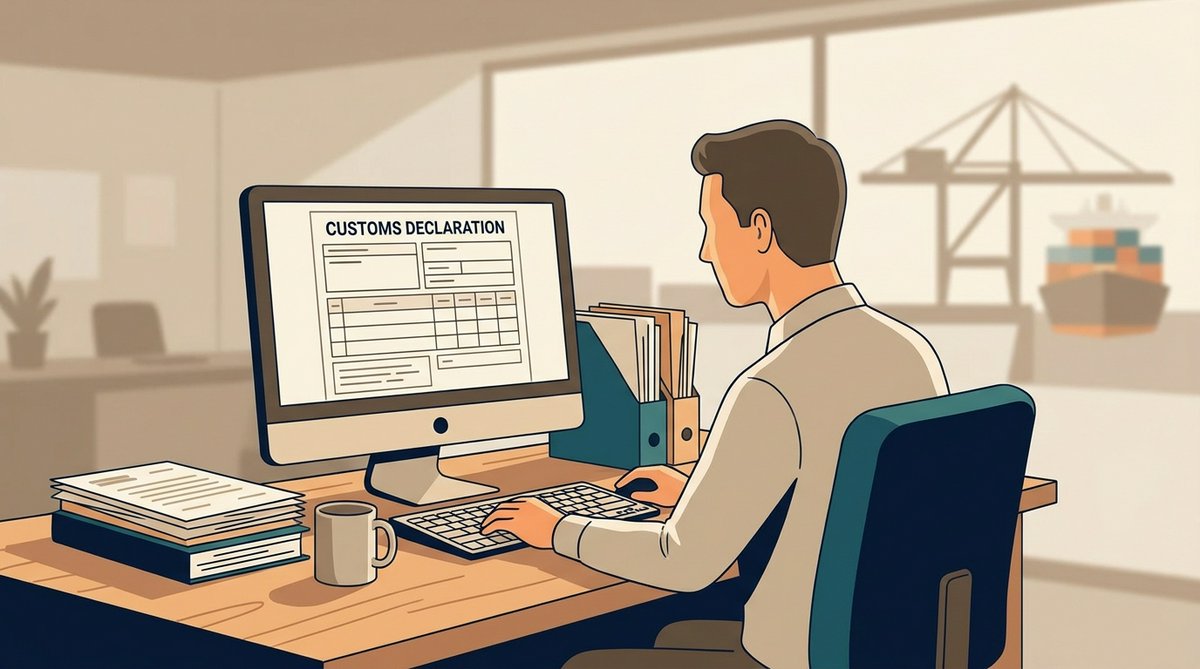
A customs broker (agente aduanal) is the licensed professional who submits your customs declaration to Costa Rica's customs platform, TICA (Tecnología de Información para el Control Aduanero), and deals with customs on your behalf. For most shipments arriving by sea or air freight, Costa Rican law requires a licensed broker to file this declaration. You cannot normally do it yourself, even for a personal shipment.
Once you send your broker the commercial invoice, packing list, and Bill of Lading, they classify your goods under the correct HS code (Harmonised System Code), calculate the duty owed, and file the declaration in TICA. They also handle any physical inspection at the Port of Caldera or Port of Limón and arrange payment of duties before your goods are released. This work involves judgement calls, particularly around classification and valuation, that go beyond simply filling in a form.
What to check before you use one
Costa Rica maintains an official registry of licensed customs brokers. Before you hand over your documents, it is worth confirming the broker you're dealing with is currently licensed, since only registered brokers can legally file with TICA.
- Current licence status, checked against the official registry.
- Experience with your type of cargo, since household goods, vehicles, and commercial freight each raise different documentation questions.
- A clear fee quote in advance, separate from the duty and taxes themselves, so you know what is broker fee and what is government charge.
Most freight forwarders and shipping lines can put you in touch with a broker, and many customers use whoever their forwarder works with as a matter of course. That's a reasonable starting point, but the licence check is yours to make.
Prohibited and restricted items: what needs a permit and what won't get through at all
Costa Rican customs doesn't only work out what duty you owe. Before that step even starts, the system checks whether your goods are allowed into the country at all, and some of them aren't allowed in without a permit obtained in advance. That check happens inside TICA (Tecnología de Información para el Control Aduanero), the customs platform that processes every declaration, and it applies whether your shipment is a container of household goods or a single box sent by courier.
Goods that are refused entry outright
Some categories are barred from import regardless of paperwork. These typically include:
- Firearms, ammunition and weapons parts brought in without prior authorisation from the relevant security authority
- Narcotics and controlled substances
- Counterfeit or pirated goods
- Products made from protected or endangered species
- Certain used tyres and other waste materials restricted on environmental grounds
If an item falls into one of these groups, no customs broker (agente aduanal) and no amount of documentation will get it released. It's worth checking before you pack.
Goods that need a permit before they travel
A second group isn't banned, but needs sign-off from a specific government body before TICA will clear it. Plants, seeds and some food products usually need a phytosanitary permit from the agricultural health authority. Pharmaceuticals and some medical devices need clearance from the Ministry of Health. Certain chemicals, telecommunications equipment and radio devices can also need a permit from the body that regulates that sector.
The practical effect is the same in each case: the permit has to exist before the shipment arrives, because TICA has nowhere to attach it retroactively. A shipment held at the Port of Caldera or Port of Limón waiting on a permit that should have been arranged weeks earlier is one of the more common and more avoidable causes of a stalled clearance.
How to check your specific item
Prohibited and restricted categories are set out on Costa Rica's official customs list, and that list is the version to check, since categories and permit requirements are revised from time to time. A general description of your goods isn't enough on its own; what matters is how the item is classified once it's assigned an HS code (Harmonised System Code), the standard code that determines both duty rate and any restriction that applies to it.
If you're not sure how your item is classified, or whether it needs a permit, a customs broker can usually tell you. For questions specific to your situation, you can also get in touch.
Sources, last reviewed 5 October 2026: Costa Rica customs regulations, International Trade Administration; Costa Rica import requirements, International Trade Administration; Costa Rica prohibited and restricted imports, International Trade Administration; Menaje de casa import policy, Ministerio de Hacienda (PDF, in Spanish).
Common questions about customs clearance
How long does customs clearance take in Costa Rica?
It depends mostly on whether your documents are complete and whether your shipment gets pulled for physical inspection. A container with a correct commercial invoice, packing list, and Bill of Lading, and no inspection flag, moves through the TICA system faster than one missing paperwork or selected for a closer look. Your customs broker (agente aduanal) can tell you where your specific shipment stands once the declaration is filed, since they're the one dealing directly with the port and TICA.
Can I clear my own goods, or do I need a customs broker?
For most commercial shipments, Costa Rican law requires a licensed customs broker (agente aduanal) to file the declaration through TICA on your behalf. Personal shipments under certain thresholds sometimes qualify for simplified handling, but the moment a shipment is commercial in nature or above that threshold, a broker becomes mandatory. It's worth confirming your shipment's category before assuming you can handle it yourself.
What happens if my shipment is selected for inspection?
TICA selects a portion of declarations for physical inspection. If your shipment is flagged, customs officers open the container or crate at the port and check the contents against what's declared on the commercial invoice and packing list. This adds time to the process, and any mismatch between what's declared and what's found can lead to further delay or additional duty assessment, so accuracy on the original paperwork matters more than it might seem.
What if my paperwork is incomplete when the shipment arrives?
Missing or incorrect documents are one of the most common reasons a shipment sits at port longer than expected. TICA won't process a declaration without the required set, so your broker will typically ask you to supply or correct whatever's missing before filing can proceed. Getting the commercial invoice, packing list, and Bill of Lading right before the shipment leaves origin avoids most of this.
Can I dispute the duty amount TICA assesses?
Yes, there's a formal process for challenging a customs valuation or classification you believe is wrong, and your broker is the one who would raise it on your behalf. It's a separate track from ordinary clearance and takes longer than accepting the assessment, so most importers only pursue it when the difference is significant. Checking the HS code (Harmonised System Code) and declared value in advance is the simpler way to avoid a dispute altogether.
Do prohibited or restricted items get caught during clearance?
Restricted and prohibited items are one of the things TICA checks for during document review and inspection, and a shipment carrying something on those lists can be held, require a special permit, or be refused entry outright. It's worth checking the official restricted items lists before goods ship. Small, seemingly harmless items sometimes fall under a permit requirement that isn't obvious until customs raises it.