
Shipping your household goods to Costa Rica
A relocation guide for anyone shipping personal belongings from the US to Costa Rica, from packing to customs to delivery at your new front door.
See the latest shipping news and updates Read the customs clearance guideHow a shipment actually moves from your home to Costa Rica
Shipping a household to Costa Rica is not one event but a sequence of them, each handled by a different party. Your goods pass from your hands to a packer, a carrier, a customs broker, and finally a local delivery crew before they reach your new address. Knowing what happens at each stage, and who is responsible for it, makes it easier to ask the right questions when you are choosing a mover.
-
Take a full inventory of what you are shipping
Every carrier and customs broker starts from the same document: a room-by-room list of everything going into the container, with an estimate of volume and weight. That list decides which container size you need, roughly what the shipment will cost, and what has to be declared to customs on arrival. Doing this early, before you call anyone for a quote, saves you re-doing it later when a carrier asks for specifics you have not worked out yet.
A detailed inventory also matters for insurance: cover on a shipment is usually written against the declared value of the listed items.
-
Pack for a sea crossing
Goods travelling by ocean sit in a steel container for weeks, often through humidity and salt air, so packing standards are higher than for a move across town. Furniture is usually wrapped and sometimes crated in wood if it is fragile or an odd shape, and boxes are packed to withstand being stacked and shifted during loading. How something is packed also affects how quickly a customs officer can match it against your inventory list at clearance.
-
Choose between a full container and shared space
A shipment either fills its own steel box, a Full Container Load (FCL), or shares space inside one with other people's goods, a Less than Container Load (LCL) shipment. Which one suits you depends mostly on volume: a small apartment's worth of belongings rarely fills a container on its own, while a full household usually does.
This decision has more effect on your total cost than almost anything else in the process, so it is worth working out roughly how much volume you have before requesting quotes.
Full container (FCL)You book the whole container. It travels sealed from the point it is loaded, which usually means fewer hands touching your goods along the way, and it can leave port as soon as it is full.
Shared space (LCL)Your goods share a container with other shipments and are combined and separated at either end. This usually costs less for a smaller load, but the extra handling at each end can add time before your goods clear customs.
-
The ocean crossing to a Costa Rican port
Once loaded, the container travels to one of Costa Rica's two main ports, Puerto Caldera on the Pacific coast or Puerto Limón on the Caribbean side, depending on the sailing your carrier uses. Which port your goods arrive at affects the last stage of the journey, since onward transport to San José or elsewhere in the country starts from wherever the ship docks.
Sailing schedules are set by the shipping line, so departure and arrival dates are estimates until the carrier confirms them close to sailing.
-
Clearing your goods through Costa Rican customs
Before your container can leave the port, a customs broker (agente aduanal) files a declaration on your behalf with TICA, Costa Rica's customs platform, using the commercial invoice, packing list, and Bill of Lading for the shipment. You cannot file this yourself as a foreign resident in most cases, which is why the broker's role sits between the ship's arrival and the goods being released to you.
The documents this requires, and what each one needs to show, are covered in more detail in the customs clearance guide elsewhere on the site.
-
Getting your goods from the port to your new home
Once customs releases the shipment, it still has to travel from the port to wherever you are settling, whether that is a short run from Puerto Caldera into the Central Valley or a longer haul from either coast. Most movers arrange this final leg as part of the same booking, delivering the container's contents to your door.
Ask early whether delivery is priced into your quote or billed separately once the goods clear customs, since this is a common place for costs to appear that were not obvious at the start.
Every shipment moves through these same stages, but how long each one takes depends on your specific route, carrier, and container type. Treat this as the shape of the process, and confirm actual sailing and clearance times with your carrier or broker once you have a booking.
Menaje de casa, and what it means for your shipment
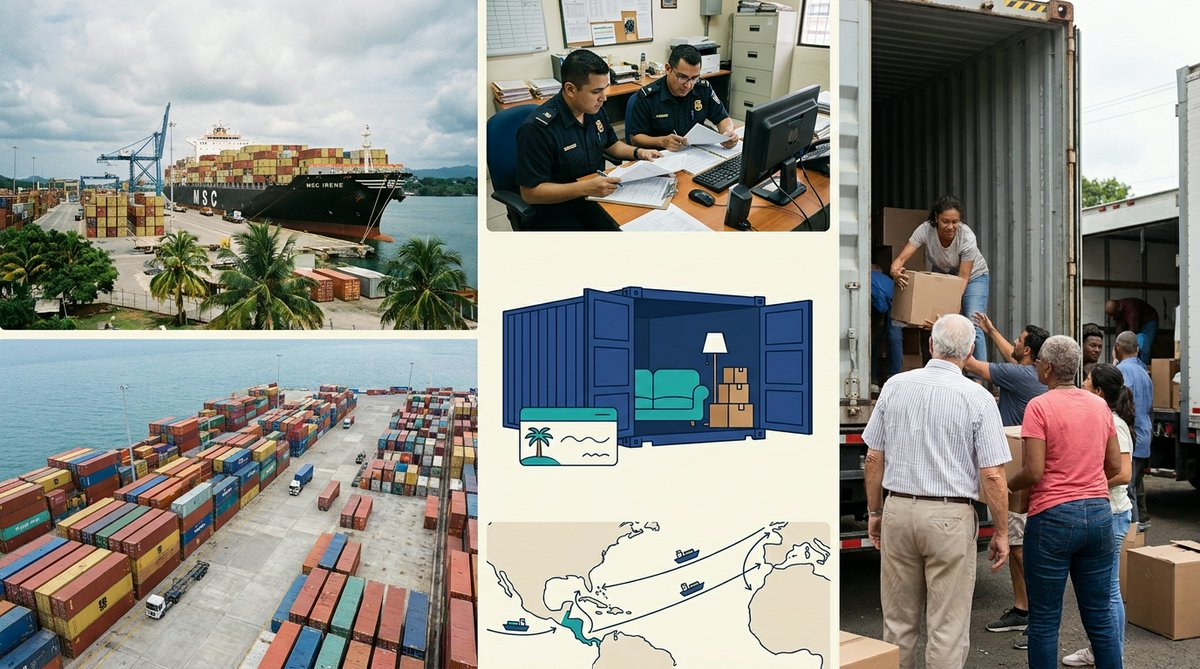
Costa Rica has a customs procedure for people moving here to declare their household belongings. It is called menaje de casa, and it covers the ordinary contents of a home, new or used: furniture, clothing, kitchenware, books, and similar personal effects.
Whether you pay duty on those goods is a separate question. The duty exemption for foreign residents came from Ley 9996, was limited to pensionado, rentista and investor residents, and could only be claimed in the law's first five years, so check with Hacienda or your customs broker whether it is still open to you. Your broker files the declaration through TICA, Costa Rica's customs system, so the residency paperwork has to be in order before the goods arrive.
What you need to show
- Proof of your residency application or approved status
- A detailed, itemised inventory of everything in the shipment
- Your passport and entry documentation
- Evidence of any duty exemption you are claiming
The inventory does most of the work here. Customs officials are checking that what arrives matches what was declared. A vague list invites questions; a specific one, room by room, item by item, moves through faster.
What it saves you
Without the exemption, imported household goods are assessed for duty on their customs value, the cost of the goods plus insurance and freight (CIF). If you hold a valid exemption, that duty is waived on the goods it covers, which on a full container is a meaningful amount of money; if you do not, budget for it. Menaje de casa does not cover vehicles or goods intended for business use. Those are treated separately under normal import rules, so it is worth sorting anything commercial out of the shipment before it ships.
Because exemptions depend on residency rules and laws that change, check the current requirements against the customs clearance guide before you pack, and confirm your specific case with your customs broker (agente aduanal) once you have a shipping date.
What a household shipment actually costs
Household relocation shipments are almost always priced as Full Container Load (FCL) or Less than Container Load (LCL). FCL means you book the whole container and nobody else's belongings travel with yours; LCL means your goods share space with other shipments and the carrier consolidates them at the port. A one-bedroom apartment often fits LCL, while a full house usually fills a 20ft or 40ft container on its own.
What changes the price
Four things move a household shipment up or down in cost, and it helps to know which one you're actually paying for before you compare quotes.
- Container size: a 20ft container suits a smaller household, a 40ft container suits a full house move, and LCL is priced by volume.
- Origin city: the US port your goods leave from affects the inland trucking cost to get there and the ocean leg itself.
- Service level: port-to-port leaves you to arrange customs clearance and last-mile delivery yourself, while door-to-door bundles clearance, a customs broker (agente aduanal), and delivery to your new address into one price.
- Destination port: goods arriving at the Port of Caldera on the Pacific side or the Port of Limón on the Caribbean side will have different onward trucking distances depending on where in Costa Rica you're settling.
Why quotes vary so much between carriers
Two carriers quoting the same container size and route can still land far apart, because one may include destination customs clearance and the other may not. Always ask whether a quote is DAP (Delivered at Place), meaning duties and clearance are on you, or DDP (Delivered Duty Paid), meaning the seller or mover handles them. Comparing a DAP quote against a DDP quote without adjusting for that difference makes the cheaper-looking one misleading.
Any duty owed on top of freight is calculated on the CIF value of your goods, meaning cost plus insurance plus freight. Whether you hold a duty exemption changes the total more than any carrier discount will, so check it with your customs broker before you compare quotes.
Getting a number you can plan around
Carrier-published rates shift with fuel surcharges and seasonal demand, so a figure quoted today won't hold for a move six months out. The freight rates page explains what moves a quote, but the only price that counts is the carrier's own. For the clearance side of the total, the customs clearance guide walks through the documents and duty basis in more detail.
Sources, last reviewed 5 October 2026: Menaje de casa import policy, Ministerio de Hacienda (PDF, in Spanish); Costa Rica customs regulations, International Trade Administration; DAP and DDP under Incoterms 2020, ICC Academy.
Checklist for shipping your household goods
A few things are worth settling before your container is booked.
-
Residency or entry status confirmed
Menaje de casa depends on your residency status, and a duty exemption depends on more than that, so check both before you count on any duty saving.
-
Room-by-room inventory written out
Your customs broker (agente aduanal) and your carrier both work from this list, so it needs item counts and approximate values.
-
High-value items noted separately
Electronics, instruments and anything irreplaceable are worth listing with serial numbers or photos in case a claim ever comes up.
-
Packing materials suited to a sea crossing
Humidity and handling over several weeks are different from a local move, so wood, fabric and electronics need more protection than a domestic mover would use.
-
Insurance decision made before loading
Decide whether you are covering the shipment yourself or through the carrier, and check what is actually excluded before the container is sealed.
-
Items checked against Costa Rica's prohibited and restricted list
Some household goods, plants and food items are refused or held at customs regardless of the exemption, so it is worth checking before they are packed.
-
Documents kept separate from the shipment
Passports, exemption paperwork, the packing list and the Bill of Lading need to travel with you or arrive by other means.
This is a starting list, not a substitute for the requirements your customs broker or carrier gives you directly, since those can vary with your circumstances.
Common questions about shipping household goods
Should I ship my belongings or buy new in Costa Rica?
That depends on what you own and what it would cost to replace it locally. Furniture and appliances often carry a higher retail price in Costa Rica than in the US, which is part of why people ship them, but shipping only makes financial sense once you weigh the freight and customs cost against replacement prices for those specific items. Sentimental or hard-to-replace pieces tend to settle the question on their own, while bulky low-value items like an old sofa often don't justify the container space.
How early should I start planning a household shipment?
Sea freight from the US to Costa Rica typically runs several weeks once you include ocean transit and customs clearance, so most of the planning work needs to happen well before your container is packed. That means sorting your inventory, confirming your residency documents for menaje de casa, and getting quotes from carriers before you fix a moving date. Leaving this until close to your move date is the most common reason people end up paying for rushed air freight instead.
Can I ship electronics and appliances to Costa Rica?
Yes, electronics and appliances are commonly included in household relocation shipments. Voltage in Costa Rica is similar to the US, so most appliances work without a converter, but it's worth checking the specific item before you pack it. Customs treatment for electronics can differ from furniture under menaje de casa, so it's worth confirming which of your items qualify before your shipment leaves.
What happens if I don't qualify for a duty exemption?
Goods with no exemption are assessed for import duty in the normal way, based on their value and customs classification (HS code). This can meaningfully change the cost of your move, which is why it's worth checking eligibility and documentation requirements before you ship.
Is it cheaper to ship a small load by air?
Air freight moves faster than sea freight but is priced by weight and volume, so it tends to cost more overall for anything beyond a few boxes. A small, time-sensitive shipment can make sense by air, while a full household move is almost always more economical by ocean freight, whether as a full container or shared container space (Less than Container Load, or LCL).
Can I get an exact price before I book a shipment?
Not from a general guide. Household shipping costs vary by container size, origin city, and the services you choose, so any figure you read online should be treated as a planning range. A binding price comes from the carrier or moving company once they know your actual inventory and route.